
Silver Lake Condos And Small-Lot Homes For Design Lovers
If you love strong lines, smart layouts, and homes that feel considered rather than cookie-cutter, Silver Lake can be especially compelling. But once you start looking, you may notice that a condo and a small-lot home can offer very different ownership experiences, even when the photos look equally polished. This guide will help you understand how these property types work in Silver Lake, what design details matter most, and what to look for before you buy. Let’s dive in.
Silver Lake is not a one-size-fits-all neighborhood, and that is part of its appeal. The Silver Lake-Echo Park-Elysian Valley Community Plan describes a predominantly residential area with dense hillside neighborhoods, steep slopes, and narrow streets.
That physical setting helps explain why attached and compact ownership options show up where they do. The plan also points to major corridors like Sunset Boulevard, Glendale Boulevard, Hyperion and Rowena, Silver Lake Boulevard, and Alvarado Street as community centers, with Sunset and nearby corridors identified for pedestrian-friendly mixed-use and infill development.
In practical terms, that means condos and small-lot homes often make the most sense near commercial edges and infill sites rather than on the steepest hillside blocks. If you are searching in Silver Lake, location within the neighborhood can shape the feel of a property just as much as the floor plan.
Los Angeles City Planning says the Small Lot Ordinance allows free-standing single-family homes and attached townhouses in multi-family and commercial parts of the city. The city presents it as a smart-growth alternative to the traditional single-family house.
For a design-minded buyer, that matters because small-lot homes are not simply standard houses placed closer together. City design standards address building orientation, primary entries, façade articulation, roofline variation, building modulation, pedestrian pathways, landscaping, and common open-space areas.
That framework often creates homes with a more architectural feel. In a neighborhood like Silver Lake, where design identity already runs deep, that can be a meaningful advantage for buyers who care about form as much as function.
A condo can also be a strong fit, especially if you want ownership with less day-to-day exterior responsibility. But a condo is not only a housing style. It is also a legal and operational structure.
In California common-interest developments, HOA membership is usually mandatory. The California Attorney General and Department of Real Estate explain that HOA documents, including CC&Rs, bylaws, and board rules, govern how the community operates, and membership transfers automatically with the property.
That structure can work well if you want a more managed environment. At the same time, it usually means more shared infrastructure and less control over exterior changes than you might have in a small-lot home.
If you are choosing between the two, the biggest difference is not always price or square footage. Often, it comes down to how you want to live with the architecture.
A small-lot home may give you the feel of a detached or semi-detached residence within a compact project. A condo may offer a lower-maintenance path to ownership, but it can also involve more shared walls, common areas, and community rules.
For many buyers, the better question is this: how do the design and ownership structure affect your daily experience? Entry sequence, window placement, outdoor access, and privacy often matter more than a listing’s headline features.
If design is your priority, it helps to look past finishes and ask sharper questions. Two homes with similar square footage can live very differently.
Pay attention to how you enter the home. Small-lot standards place emphasis on primary entries and pedestrian pathways, which can create a more intentional arrival experience than you may find in a typical infill project.
A good entry sequence can make a compact home feel more composed and private. In Silver Lake, where many sites are irregular or sloped, that detail matters.
The city’s small-lot standards also address façade articulation, roofline variation, and building modulation. Those elements may sound technical, but they affect whether a home feels flat and repetitive or layered and architectural.
For buyers drawn to modern forms, that can be a real point of distinction. In Silver Lake especially, homes that respond well to the site often feel more aligned with the neighborhood’s design character.
In a condo, shared walls are common, and in either property type, window placement deserves close attention. The relationship between your windows, a neighboring structure, and the street can shape light, privacy, and even noise more than staged photos suggest.
This is especially important in Silver Lake because steep slopes and narrow streets can create unusual sightlines. A bright interior on paper may feel more exposed in person, or more private than you expected depending on the site.
Outdoor space is a major selling point in Los Angeles, but the details matter. A patio, balcony, roof deck, or courtyard may be private, shared, or maintained by an association or another agreement.
In small-lot projects, common access driveways, walkways, utility easements, maintenance agreements, guest parking, trash pickup, and common open-space easements can all affect how outdoor areas function. The key is to confirm what you actually control, not just what appears in the listing.
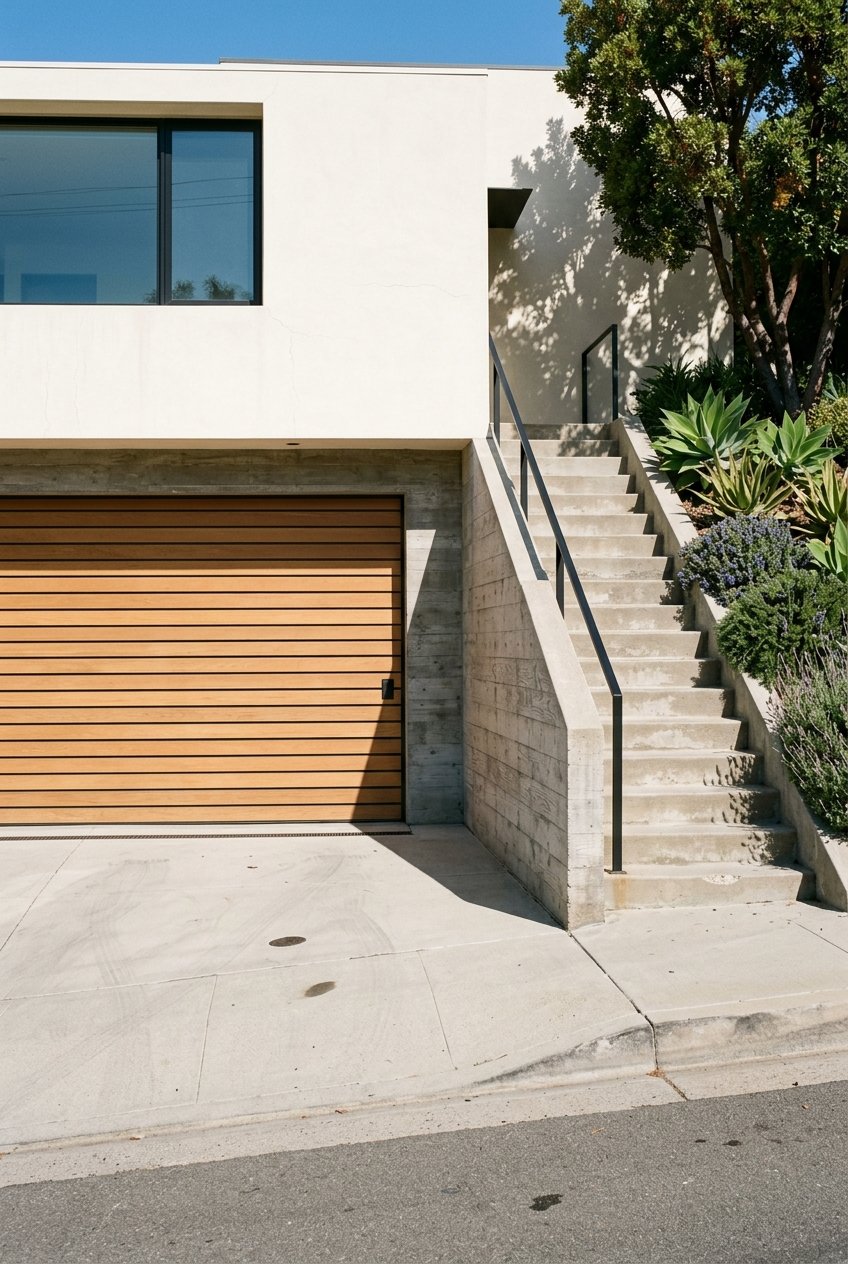
Silver Lake’s topography changes the experience of ownership. The community plan’s description of steep slopes and narrow streets is not just background context. It has a direct effect on livability.
Two homes with similar finishes can feel completely different based on driveway access, lot lines, elevation changes, and window orientation. In some cases, access and parking may influence your daily ease more than an extra room or a larger kitchen island.
That is one reason design-minded buyers benefit from seeing homes through both an architectural and practical lens. A well-composed home should also work smoothly when you arrive, park, enter, and move through the space.
If you are considering a condo, or any property in a common-interest development, document review is essential. California law requires sellers to provide buyers with key materials, including governing documents, budget and reserve information, current assessments and unpaid balances, certain notices and inspection reports, and board minutes on request.
Those documents help you understand not just the rules, but also the financial health of the community. The annual budget report includes insurance and reserve-funding disclosures, and reserve studies must include a visual inspection at least once every three years, with annual board review of the reserve analysis.
You should also know that HOA costs can change. Under current California law, boards generally cannot raise regular assessments by more than 20% in a fiscal year or impose special assessments above 5% of budgeted gross expenses without member approval, subject to statutory exceptions.
If a property is part of a conversion project, it is worth taking an even closer look. The California Department of Real Estate notes that some conversions may have higher maintenance and repair needs than buyers expect, especially after any developer subsidy period ends.
When you tour condos and small-lot homes in Silver Lake, it helps to compare them with a consistent set of questions.
For design lovers, this kind of comparison usually leads to better decisions. It keeps you focused on how a home actually lives, not just how it photographs.
If you want a more independent feel with compact planning and often stronger architectural expression, a small-lot home may be the better fit. If you want a lower-maintenance ownership path and are comfortable with shared governance, a condo may make more sense.
In Silver Lake, neither option is automatically better. The right choice depends on how the property handles privacy, outdoor space, access, and design, all within the realities of the neighborhood’s topography and infill patterns.
That is where a local, design-aware buying strategy can make a real difference. When you understand the site as well as the structure, you can buy with more clarity and fewer surprises.
If you are weighing condos or small-lot homes in Silver Lake, the right guidance can help you narrow the field quickly and focus on properties that truly fit your design priorities. The Longfellow + Leach Team offers a thoughtful, hyperlocal approach for buyers who want to balance architecture, livability, and smart decision-making.
Stay up to date on the latest real estate trends.
We're here to help you every step of the way. Reach out today with our experienced team for expert guidance and support.