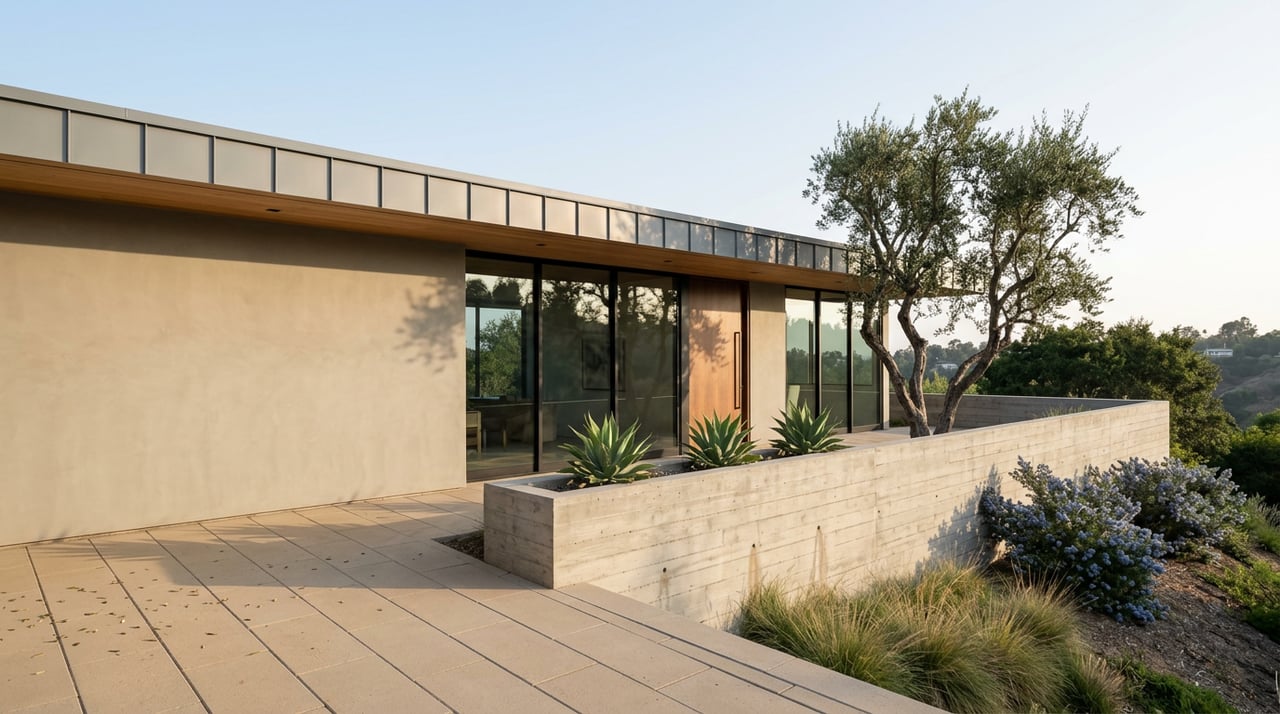
Paperwork and Insurance Timing for Hollywood Hills Escrows This Fall
Two homes list in the same week, a half mile apart, priced within $50,000 of each other. One closes in three weeks. The other is still in escrow six weeks later, not because of the inspection, not because of financing, but because nobody ordered a brush clearance report or an insurance quote until it was almost too late.
That gap is becoming the real story in the Hollywood Hills this fall. Price still gets the headline, but it is no longer what decides whether a deal actually closes on schedule.
Median price is the number every portal leads with, and it tells you less than it used to. In the three months ending June 2026, the median sale price for a home in Hollywood Hills was $1.7 million, down 4.5 percent from the same period a year earlier, while the median price per square foot climbed to $837, up 10.6 percent. Homes sold in an average of 59 days, down from 67 the year before, though fewer of them sold: 70 in June versus 85 the year prior.
Zillow's broader estimate for the area put the average home value at $1,945,658 as of late July 2026, down a modest 0.3 percent, with homes going to pending in about 44 days. That is a healthy pace on paper, but a 59-day average hides a wide spread underneath it: some hillside listings clear escrow in under three weeks, others sit well past two months, and the gap tracks less with price than with two pieces of paperwork most listing photos never mention, a brush clearance compliance report and a fire insurance binder.
California's Assembly Bill 38 requires sellers of property inside a designated Fire Hazard Severity Zone to submit documentation during escrow showing a compliant defensible-space inspection report before the sale can close. For sellers in that zone, this is not an optional courtesy. It is a document escrow will ask for.
The mechanics matter more than the headline. LA County Fire Department guidance says a home that already passed its annual defensible-space inspection within six months of closing can generally use that existing report to satisfy the requirement, which is why timing the inspection before listing, rather than scrambling after an accepted offer, is the difference between a clean escrow and a stalled one.
The Los Angeles Fire Department runs the compliance side of this for properties within the city's Very High Fire Hazard Severity Zone. For 2026, the inspection fee is $31 per parcel, and it is waived entirely if the property is already compliant by the May 1 inspection start. Fail twice, though, and the fee schedule escalates fast: a second failed inspection adds a non-compliance fee on top of the initial charge, and if the property still is not cleared, the city sends its own contractor and bills the homeowner for the work, which almost always costs more than hiring a crew directly.
A house that has never had a brush problem can still lose weeks in escrow if nobody thought to check when the last inspection happened.
The second piece of friction is arriving on a fixed date. The California Department of Insurance approved a 29.1 percent average rate increase for California FAIR Plan dwelling policies, effective October 15, 2026, on both new and renewing policies. The FAIR Plan had originally requested 35.8 percent, so this is the state's compromise number, but it is still the largest approved increase the program has seen in recent memory, and the increase is not distributed evenly. Individual renewals could range from roughly a 20 percent decrease to a 50 percent increase depending on a property's wildfire exposure, and homes in the highest-risk tiers could see the wildfire portion of their premium double.
That matters in the Hollywood Hills specifically because the FAIR Plan is often the only option once a private carrier declines to write a policy on a hillside address. As of June 2026, the Plan's total exposure had grown to $768 billion, an 11 percent jump since September 2025 and a 250 percent increase since September 2022, with policies in force up to nearly 697,000. A separate Difference in Conditions policy typically adds another 25 to 60 percent on top of the FAIR Plan premium itself.
For a buyer under contract, this is not an abstract cost. If the FAIR Plan quote comes back slow, or the DIC carrier asks for more documentation, the closing date is the thing that moves. That is the pattern insurance brokers describe most often: a buyer clears every other contingency, then loses days or weeks waiting on a coverage stack that nobody priced out until escrow was already underway.
There is a genuine offset available. According to Oakview Insurance, the FAIR Plan updated its wildfire hardening discount program effective November 15, 2025, and a dwelling policyholder who documents all twelve qualifying mitigation steps, things like a Class A fire-rated roof and ember-resistant vents, can see up to a 16.4 percent reduction on the wildfire portion of the bill. That discount does not apply automatically. It has to be requested and documented with the carrier, which is one more reason the paperwork trail matters as much as the property itself.
The Hollywood Hills is not one market, and the canyons that make up its identity, Laurel Canyon, Beachwood Canyon, Nichols Canyon, Outpost Estates, the Bird Streets, each sit at a different point on the insurability spectrum before price even enters the conversation. A dense, character-home street with mature landscaping and narrow access reads very differently to a fire-risk model than a newer build with modern hardening and a cleared perimeter, even if the two are separated by a few blocks and a similar list price.
That is part of why the days-on-market average for Hollywood Hills, 59 days across the second quarter of 2026, sits on top of such a wide range of individual outcomes. A home that clears its brush inspection early and comes with a recent, bindable insurance quote in hand is simply easier for a buyer's lender to say yes to on schedule.
For sellers preparing to list, and for buyers writing an offer on a hillside property, the order of operations is what keeps a transaction moving.
None of this changes what a hillside home is worth. It changes whether the sale actually reaches the closing table on the timeline everyone agreed to at the start.
None of this is a reason to avoid the Hollywood Hills. It is a reason to treat the insurance and compliance steps as part of the presentation, the same way a design-minded seller treats staging or a pre-sale repair. A house that shows up to escrow with its defensible-space report already in hand and a hardening summary ready for an insurance broker is simply an easier yes for a lender, and an easier close for everyone at the table.
Buyers benefit from the same discipline in reverse. Knowing which pocket of the hills tends to insure cleanly, and asking for a quote before falling in love with a house, saves weeks of uncertainty later.
Does every home in the Hollywood Hills fall under the AB-38 requirement? A recent defensible-space compliance letter is the fastest way to confirm status.
Can documented brush clearance actually lower an insurance quote? Yes. Carriers reviewing FAIR Plan applications now offer discounts tied to specific hardening steps, and a compliant defensible-space report is often the first document a broker asks for when shopping a hillside policy.
If you are weighing a sale or a purchase in the Hollywood Hills this fall and want a clear read on where your specific street stands on both fronts, the team at Longfellow + Leach can walk through it with you. Get a Complimentary Valuation & Design Plan and start the conversation before the paperwork becomes the deadline.
This article is general information, not legal, tax or financial advice. Consult a qualified professional about your situation.
Stay up to date on the latest real estate trends.
We're here to help you every step of the way. Reach out today with our experienced team for expert guidance and support.