Los Feliz Architecture Walking Tour for Design Lovers
If you love architecture, Los Feliz rewards slow looking. In just a few blocks, you can move from Frank Lloyd Wright’s landmark work to a village storefront strip, then climb into hillside streets where Spanish Revival, Tudor, and modern homes all respond to the same dramatic terrain. If you want to understand why design-minded buyers are drawn here, this walking tour gives you a clear way to read the neighborhood from public spaces. Let’s dive in.
Los Feliz has an unusually deep architectural record. The Los Feliz Improvement Association documents more than 5,000 residences, commercial buildings, and landmarks in the neighborhood, and notes that the area includes more than 50 Historic-Cultural Monuments. That level of documentation reflects something you can feel on foot: Los Feliz is not defined by one signature house, but by a layered, cohesive design environment.
The neighborhood works especially well as a sequence of streetscapes. You can experience a public park and landmark residence, a walkable commercial edge along Vermont Avenue, and then a hillside district of Period Revival and later modern homes. That progression is what makes a walking tour here feel so rich.
Landscape is part of the story too. The deodar cedars on Los Feliz Boulevard, the public stairways in the hills, and the notable trees along Vermont Avenue all contribute to the visual identity of the area. In Los Feliz, the setting often matters as much as the structure itself.
Barnsdall Art Park is the natural opening stop for a design-focused walk. The park sits at the crest of Olive Hill and offers broad city views, which helps frame one of the key ideas of Los Feliz architecture: siting matters. Homes and landmarks here are rarely just objects. They are placed to respond to slope, light, and outlook.
Hollyhock House is the public anchor. Designed by Frank Lloyd Wright between 1919 and 1921 for Aline Barnsdall, it was Wright’s first Los Angeles commission and the centerpiece of a larger artists’ colony vision on Olive Hill. It reopened to the public in 2015 and is part of the UNESCO-listed Frank Lloyd Wright sites.
As you view the house and grounds, pay attention to massing, horizontality, and the way the building feels tied to the hilltop. Even if you are already familiar with Wright, seeing Hollyhock House in this broader neighborhood context helps explain why Los Feliz appeals to buyers who care about architecture as lived experience, not just style labels.
From Barnsdall, the next chapter of the walk is the Los Feliz Village Commercial Historic District along the east side of Vermont Avenue between Franklin Avenue and Hollywood Boulevard. City Planning describes this district as a linear grouping of about 15 storefront buildings. It is a compact stretch, but it says a lot about how Los Feliz balances everyday convenience with strong visual character.
The storefronts are mostly vernacular in form, with Spanish Colonial Revival, Art Deco, Streamline Moderne, and Mid-Century Modern influences. The Los Feliz Theater, which opened in 1934, anchors the corridor and gives the district a recognizable focal point. This part of the walk is useful because it shows that design in Los Feliz is not limited to houses.
As you move along Vermont, notice the rhythm of storefront widths, parapets, signage zones, and corner conditions. Also notice the Moreton Bay fig trees on Vermont Avenue north of Los Feliz, which are part of the neighborhood’s historic character. In a design-minded neighborhood, the street itself becomes part of the composition.
From the commercial corridor, the walk shifts uphill into the Los Feliz Heights Residential Historic District. City Planning describes this district as a cohesive collection of 317 single-family residences built between 1920 and 1949 on the south-facing slope of Mt. Hollywood. The district extends from Nottingham Avenue to Vermont Avenue and from Los Feliz Boulevard to the edge of Griffith Park.
This is where the tour becomes less about individual landmarks and more about reading the neighborhood as a whole. Curving streets, irregular slopes, mature vegetation, period lamp posts, concrete sidewalks without parkways, and public stairways all shape the experience. The terrain creates constant changes in perspective, which makes façades, rooflines, and retaining walls more noticeable.
Many homes here were designed by notable architects, including Paul R. Williams, Milton J. Black, Gordon Kaufmann, Wallace Neff, and Morgan, Walls & Clements. Yet what often stands out first is the consistency of the setting. Even with a mix of styles, the district feels coherent because the streetscape holds it together.
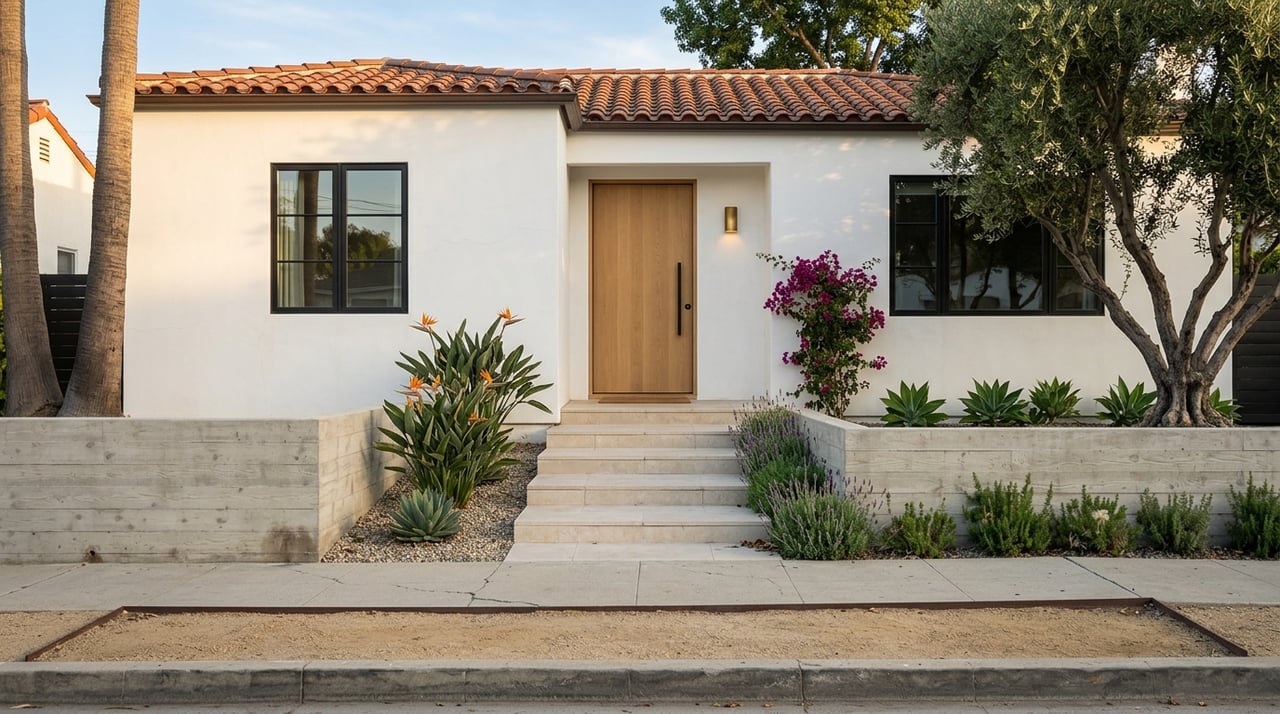
Los Feliz is especially strong in Spanish Colonial Revival and Mediterranean Revival architecture. These styles feel at home on hillside streets because their stucco walls, tiled or expressive roof forms, loggias, balconies, and garden relationships work well with Southern California light and topography.
One notable example is the J. W. Blank Residence on Edgemont Street, a 1928 Spanish Colonial Revival house and Historic-Cultural Monument. The Los Feliz Improvement Association describes it as one of the earlier homes in Los Feliz Square, with stucco cladding, a transverse roof gable, open eaves, and traditional massing. From the sidewalk, those elements tell you a lot about how the house balances ornament with simple form.
Another stop to keep in mind is the Durex Model Home on Amesbury, built in 1929 as a showcase home for the Los Feliz Hills subdivision. The 1925 house on Franklin Avenue built for Harry Coger is also cited as a local Mediterranean Revival example. As you walk, look beyond decoration and focus on how entries, balconies, and roof shapes help each home meet the grade.
When you are viewing these homes from public sidewalks, a few details can help you read them more clearly:
In Los Feliz, hillside siting is often as important as the style itself. A beautiful façade may be only part of the story.
Tudor Revival appears throughout Los Feliz Heights, but Amesbury is a particularly useful street for spotting the style’s defining features. The Sherwood House on Amesbury is a Historic-Cultural Monument and one of the first homes built in the Los Feliz Hills subdivision. LFIA describes it as an outstanding example of English Tudor Revival.
From a public vantage, key Tudor elements are easy to identify once you know what to look for. The Sherwood House features a steep roof, half-timbering, tall mullioned windows, a high chimney, and a jettied second floor. Those features create the vertical emphasis and storybook character that make Tudor homes stand apart from nearby Mediterranean and Spanish examples.
On a street like Amesbury, the fun is in comparison. You can see how homes from the same broad era express very different moods through rooflines, wall treatments, and window proportions, while still feeling like part of the same hillside neighborhood.
Los Feliz is not frozen in one historic period. It also has a strong modernist layer, especially on steep lots where architects could use decks, glazing, and structural clarity to engage the view. That shift from revival architecture to modern design is one of the most compelling parts of the neighborhood story.
The Lovell Health House at 4616 Dundee Drive is one of the defining examples. It is a Historic-Cultural Monument and an early International Style landmark by Richard Neutra. LFIA describes it as one of America’s first International Style residences, with an open, free-flowing plan and steel-frame construction.
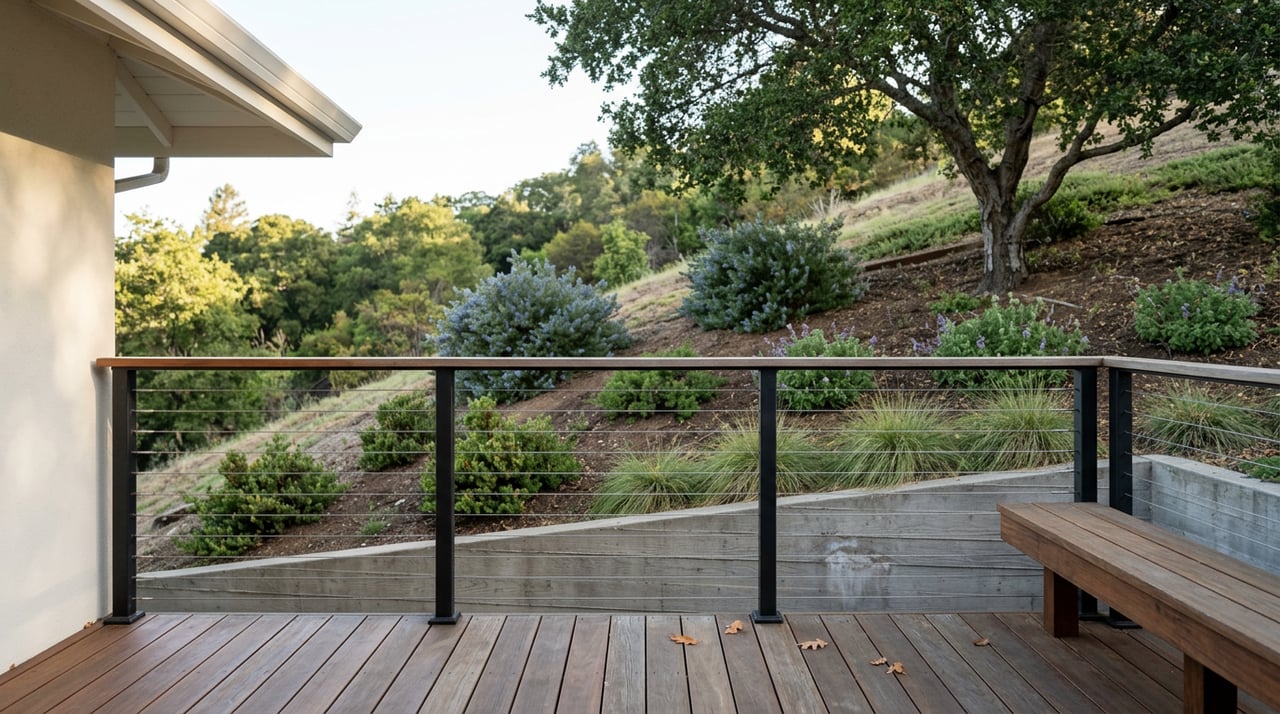
Nearby, the Jacobson House on Dundee, designed by Edward Fickett in 1966, adds a Mid-Century Modern and Post and Beam note to the walk. LFIA identifies wraparound decks, floor-to-ceiling windows, skylights, and a landscape-integrated plan as defining features. These are the kinds of houses that show how Los Feliz architecture evolved with changing ideas about indoor-outdoor living.
Farther north, the Milt Davis House on Nottingham is a 1975 Late Modern design with redwood siding, open decks, and view-conscious siting. Together, these homes reveal how the neighborhood’s steep terrain continued to inspire new architectural responses long after the early revival era.
When the style shifts to modern, your eye should shift too. Focus on these elements:
Modern Los Feliz often feels lighter and more open, but it is still deeply tied to the hillside.
One of the smartest ways to experience Los Feliz is to think beyond buildings alone. The Los Feliz Heights Steps between Bonvue and Cromwell Avenues are part of the neighborhood’s historic fabric, and the deodar cedars on Los Feliz Boulevard are repeatedly cited as part of its identity. These features are not background scenery. They help explain why the neighborhood feels composed rather than accidental.
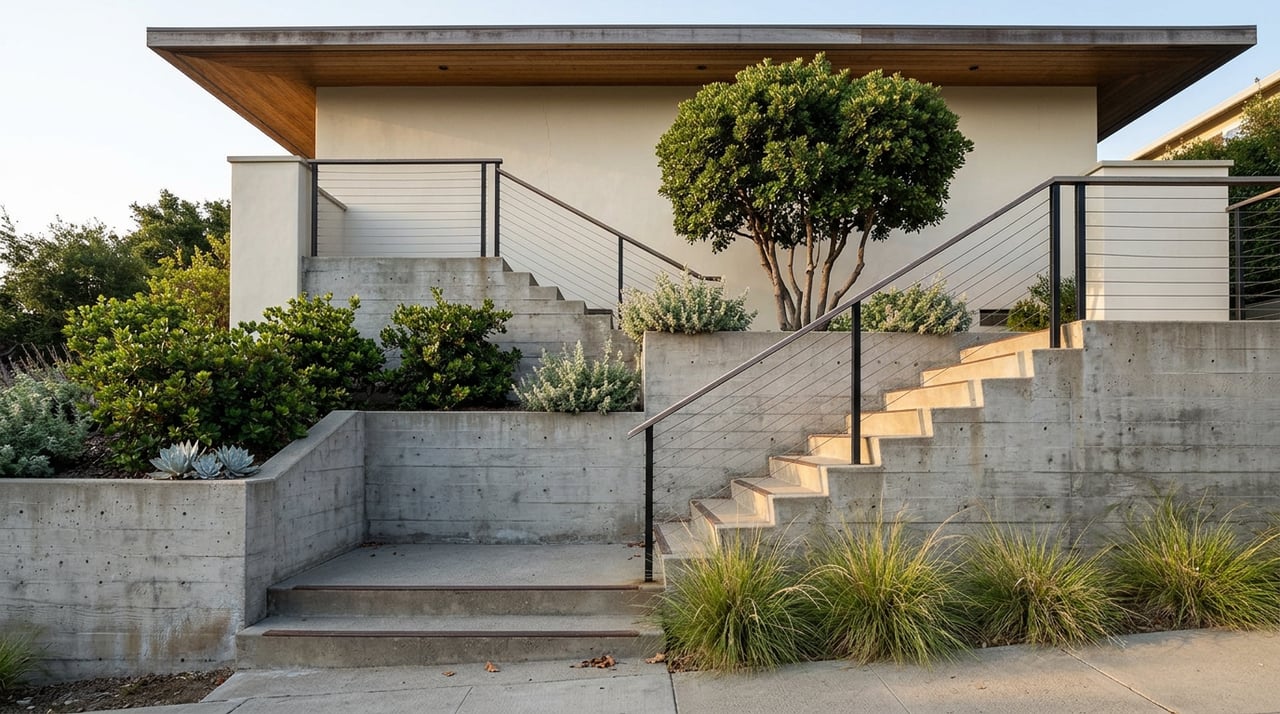
Public stairways create changing vantage points and reveal how homes relate to grade, walls, and front elevations. Mature trees soften the architecture, frame long views, and make even short walks feel cinematic. For design lovers, these details often become the reason a block feels memorable.
For buyers, a walking tour like this makes it easier to understand what you are really purchasing in Los Feliz. You are not only evaluating square footage or finishes. You are also buying into a highly intact design environment shaped by architecture, landscape, public streets, and preserved character.
For sellers, that context matters when it is time to position a home. In a neighborhood where design literacy runs high, buyers notice siting, façade composition, period details, and the relationship between a home and its streetscape. Thoughtful presentation and storytelling can help those qualities read more clearly in the market.
Los Angeles preservation tools also play a role in why these streets still feel cohesive. The city’s historic landmark program and local historic district rules require additional review for exterior work, with the goal of keeping new work complementary to historic character. That framework helps preserve the neighborhood identity that continues to attract design-minded buyers.
Many of the homes that make this walk memorable are private residences. That includes major landmarks such as the Ennis House on Glendower Avenue, which is a private residence, and other architecturally important houses identified as private or do not disturb. The best approach is simple: stay on public sidewalks, stairways, and park paths.
That public-facing perspective is enough. In Los Feliz, rooflines, façades, windows, planting, and site design already tell a rich story from the street. You do not need interior access to understand why the neighborhood has such lasting design appeal.
If you are considering buying or selling in Los Feliz, walking the neighborhood with a trained eye can reveal value that photos alone miss. The Longfellow + Leach Team brings a design-forward, hyperlocal perspective to Los Feliz homes, from hillside architecture to thoughtful positioning and presentation.
Stay up to date on the latest real estate trends.
We're here to help you every step of the way. Reach out today with our experienced team for expert guidance and support.