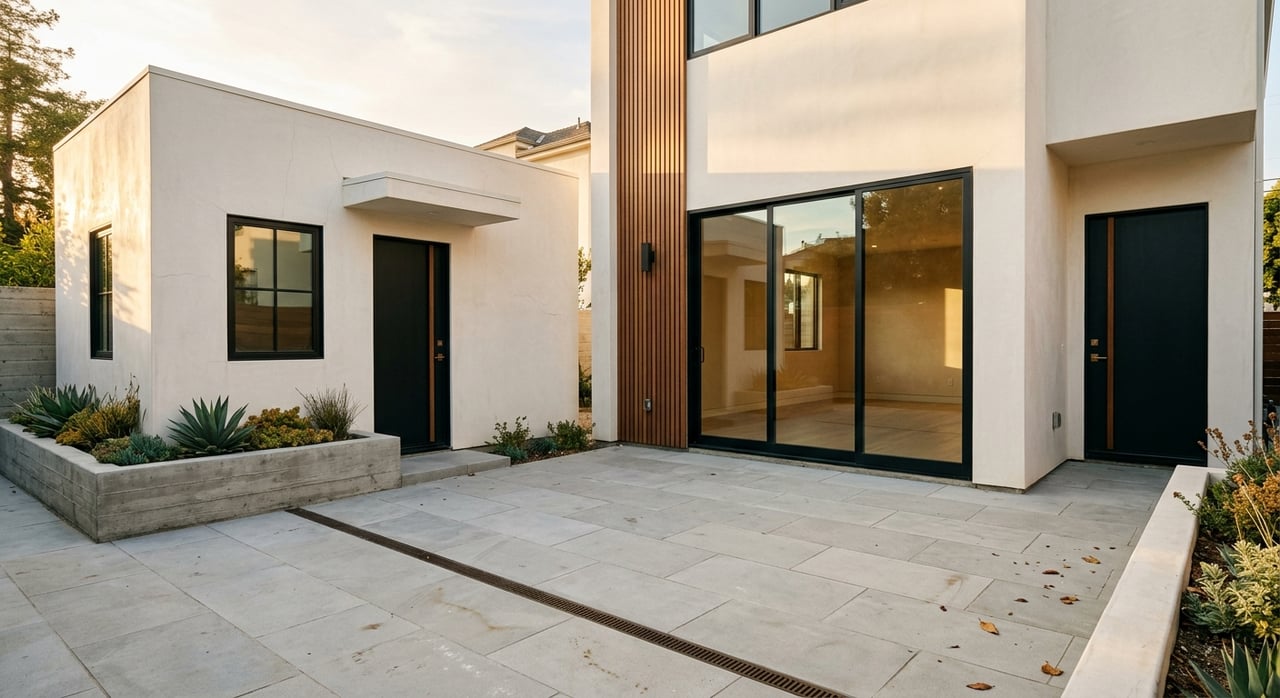
Echo Park House Hacking Rentals and Rent Rules
Thinking about house hacking in Echo Park? The idea sounds simple: live in one part of the property, rent out the rest, and let that income help with your mortgage. In Los Angeles, though, the details matter a lot because the rules can change based on the property type, construction date, and whether a unit falls under local rent regulations. This guide will help you understand the main rent rules, short-term rental limits, and setup options that shape house hacking in Echo Park. Let’s dive in.
In Echo Park, house hacking is less about one strategy and more about how your property is classified. A duplex, an ADU, a rented bedroom, and a short-term rental can all follow different rules.
Because Echo Park is within the City of Los Angeles, the biggest frameworks to understand are the City’s Rent Stabilization Ordinance, or RSO, the Just Cause for Eviction Ordinance, or JCO, and California landlord-tenant law. For some properties, statewide AB 1482 also matters as a backstop when an exemption does not apply.
That means two homes on the same street can produce very different outcomes for an owner. Before you count on rental income, you need to know which rules apply to your exact setup.
An owner-occupied duplex is one of the clearest house hacking models. You live in one unit and rent the other, which can help offset ownership costs while keeping you close to the property.
Under California’s AB 1482, an owner-occupied duplex may be exempt from the statewide rent-cap and just-cause rules if you live in one unit when the tenant moves in and continue to live there. But that does not automatically remove local Los Angeles rules. If the duplex was built on or before October 1, 1978, it may still fall under the City’s RSO.
For Echo Park buyers, that makes the building date especially important. A charming older duplex may offer strong long-term appeal, but it can also come with a very different compliance picture than a newer property.
An ADU or JADU can create extra flexibility on a single-property lot. In Los Angeles, an ADU is an attached or detached independent living unit on the same lot as a primary residence, and the City permits ADUs through its ordinance and building permit process.
There is an important nuance here for older Echo Park homes. LAHD states that a detached ADU on a parcel with a pre-1978 single-family dwelling is generally not RSO-covered, but adding that second unit can cause the original house to become subject to the RSO because the parcel now has two units.
That is a big deal for owners planning a renovation-driven house hack. If you are thinking about adding an ADU, you need to look at the effect on the entire property, not just the new unit.
Renting a room can be the simplest path into house hacking. If you live in the home and rent one room to one person, California may treat that occupant as a lodger instead of a standard tenant, but only if the facts fit the legal definition.
That distinction matters because the owner keeps access to the room and may be able to use a simpler written-notice removal process if the lodger does not leave. Still, this is not something to assume casually. The setup has to meet the actual requirements for lodger status.
For many first-time house hackers, this option can feel more manageable than taking on a separate unit. It may offer income with fewer moving parts, especially if you want to ease into shared-property ownership.
LAHD says the RSO generally applies to rental properties built on or before October 1, 1978. That can include duplexes, two or more single-family dwelling units on the same parcel, and in some situations ADUs and JADUs.
If your unit is subject to the RSO, the current annual rent increase is 3% from July 1, 2025 through June 30, 2026. The City also requires annual registration, required notice posting, and service of the annual registration statement. New owners have 45 days to register rental units.
In practical terms, RSO coverage can directly shape your cash flow assumptions. If you are evaluating an Echo Park income property, projected rental upside should be tested against the actual local rules, not broad market averages.
A lot of buyers assume that if a unit is not rent-controlled, there are few local limits. In Los Angeles, that is not the case.
The City’s Just Cause for Eviction Ordinance applies to most non-RSO residential rentals, including non-RSO multifamily units and rentals in single-family homes and condominiums. So even if a property is outside the RSO, tenant removal rules may still be governed by local just-cause protections.
This matters for owner-occupants and investors alike. A property can offer flexibility in one area, like rent-setting, while still requiring careful compliance in another.
AB 1482 still matters for many rental situations. It generally caps rent increases at 5% plus CPI or 10%, whichever is lower, and it typically adds just-cause protections after 12 months of tenancy.
The law also includes exemptions, including some single-family homes and qualifying owner-occupied duplexes. In Echo Park, this is one more reason your strategy should be reviewed property by property rather than by neighborhood alone.
California requires written notice for rent increases. If the increase is 10% or less, 30 days’ notice is generally required. If the increase is more than 10%, 90 days’ notice is generally required.
Even a straightforward rent adjustment needs to be handled with the right paperwork and timeline. Good records and clear communication are part of protecting your investment.
If your house hacking plan involves short-term rentals, Los Angeles has a separate system to follow. The City’s Home-Sharing Program limits short-term rentals to a host’s primary residence, requires City registration, and requires the registration number to appear on listings.
The program offers Standard Home-Sharing for up to 120 days per year and Extended Home-Sharing for more than 120 days per year. Hosts must also register to pay the Transient Occupancy Tax.
Eligibility is the key issue in Echo Park. To legally home-share, the home must be your primary residence, it must not be subject to the RSO, and if you are a renter rather than an owner, you need written landlord approval.
LAHD also states that home-sharing is not allowed in units subject to the RSO. That means many older Echo Park properties may not qualify for legal short-term rental use if they are RSO-covered or if the property is not your primary residence.
For buyers drawn to Echo Park’s older housing stock, this can be one of the biggest planning mistakes to avoid. A property that looks ideal for flexible rental use may not support that strategy under City rules.
California requires landlords to keep rental units habitable. That includes basics like working plumbing, heating, electrical systems, floors, stairs, locks, and pest control.
For house hackers, this matters because your rental income depends on a livable and well-maintained space. It also helps set expectations if you are budgeting for upgrades or deciding whether a fixer is truly worth the effort.
Under California Civil Code section 1954, a landlord may enter only for limited reasons, such as emergencies, repairs, inspections, or showing the unit. In most cases, written notice is required, and 24 hours is presumed reasonable.
If the purpose is to show the unit to prospective buyers, oral notice can be allowed only if prior written notice was given within 120 days that the property is for sale and that the landlord may contact the tenant orally for that purpose. If you plan to eventually sell or refinance, clean tenant communication matters from the start.
Security deposits are refundable and, for most residential rental properties, are now capped at one month’s rent, with limited exceptions for some smaller landlords. After move-out, landlords generally must return the deposit and provide an itemized statement within 21 days.
Deposits can generally be used only for unpaid rent, damage beyond ordinary wear and tear, cleaning, and authorized property replacement. For owner-occupants, this is one of the easiest areas to stay organized with strong written records and move-in documentation.
If you are creating an ADU or renovating while a tenant remains in place, be careful about service reductions. LAHD guidance states that removing a housing service such as parking during ADU creation can trigger a rent reduction, and any change to tenancy terms requires written notice.
In a design-forward neighborhood like Echo Park, renovations are often part of the value story. But when tenants are already in place, improvements need to be planned with both design and compliance in mind.
House hacking in Echo Park can still be a smart strategy, but the opportunity usually lives in the details. The best setup depends on whether you are buying a duplex, adding an ADU, renting a room, or hoping to use short-term rental income.
The key questions are simple: When was the property built? Is it owner-occupied? Is the unit or parcel subject to the RSO? Does the JCO apply? Is the home your primary residence? Those answers shape what you can do, how much flexibility you have, and how predictable your income may be.
If you are evaluating a duplex, a hillside property with ADU potential, or an income-producing asset in Echo Park, local context matters. The right purchase is not just about the architecture or the view. It is also about choosing a property whose rules match your strategy.
If you want help finding the right Echo Park property or evaluating how a specific home may fit your goals, the Longfellow + Leach Team can help you approach the numbers, layout, and neighborhood context with a clear local lens.
Stay up to date on the latest real estate trends.
We're here to help you every step of the way. Reach out today with our experienced team for expert guidance and support.