Where Silver Lake Walkable Living Works Best
If you want the ease of a more walkable lifestyle without giving up Silver Lake’s hills, views, and character, you are not alone. Many buyers and renters are looking for a Los Angeles neighborhood where daily errands, coffee runs, and a quick commute do not always require a car. In Silver Lake, that lifestyle is possible, but it depends a lot on where you live and how you plan your routine. Let’s dive in.
Silver Lake can support a car-light lifestyle, but it works best as a series of convenient pockets rather than one uniformly walkable neighborhood. Walk Score rates Silver Lake at 81 for walkability, 54 for transit, and 51 for biking, and notes that most errands can be done on foot. It also lists about 217 restaurants, bars, and coffee shops in the neighborhood.
The strongest day-to-day convenience tends to show up near the flatter commercial corridors. The City’s community plan identifies Hyperion, Rowena, Silver Lake Boulevard, and Alvarado as commercial areas that provide goods and services residents need. The Silver Lake Neighborhood Council also points to Sunset Junction as the neighborhood’s best-known commercial core.
If you are choosing a home with fewer car trips in mind, these pockets often offer the most practical setup. You are more likely to be close to food, shops, and recurring errands that fit naturally into a walking routine. That can make everyday life feel easier, even in a city as spread out as Los Angeles.
Sunset Junction is one of the clearest examples of car-light living in Silver Lake. As a recognized neighborhood center, it gives you access to a concentration of daily destinations in one area. That matters because car-light living is less about one perfect transit line and more about having enough essentials close together.
Living near Sunset Boulevard can also improve your transit options. Metro Line 2 serves Silver Lake via Sunset Boulevard, including stops at Sunset & Alvarado and Vermont/Sunset B Line Station. For many residents, that overlap between walkable streets and useful transit is what makes the lifestyle work.
The reservoir edge is another area where living car-light can feel realistic. The City and local neighborhood resources highlight the reservoir, Silver Lake Meadows, the recreation center, and the network of public stairways as major pedestrian assets. These features help connect hillside homes to lower commercial streets and public spaces.
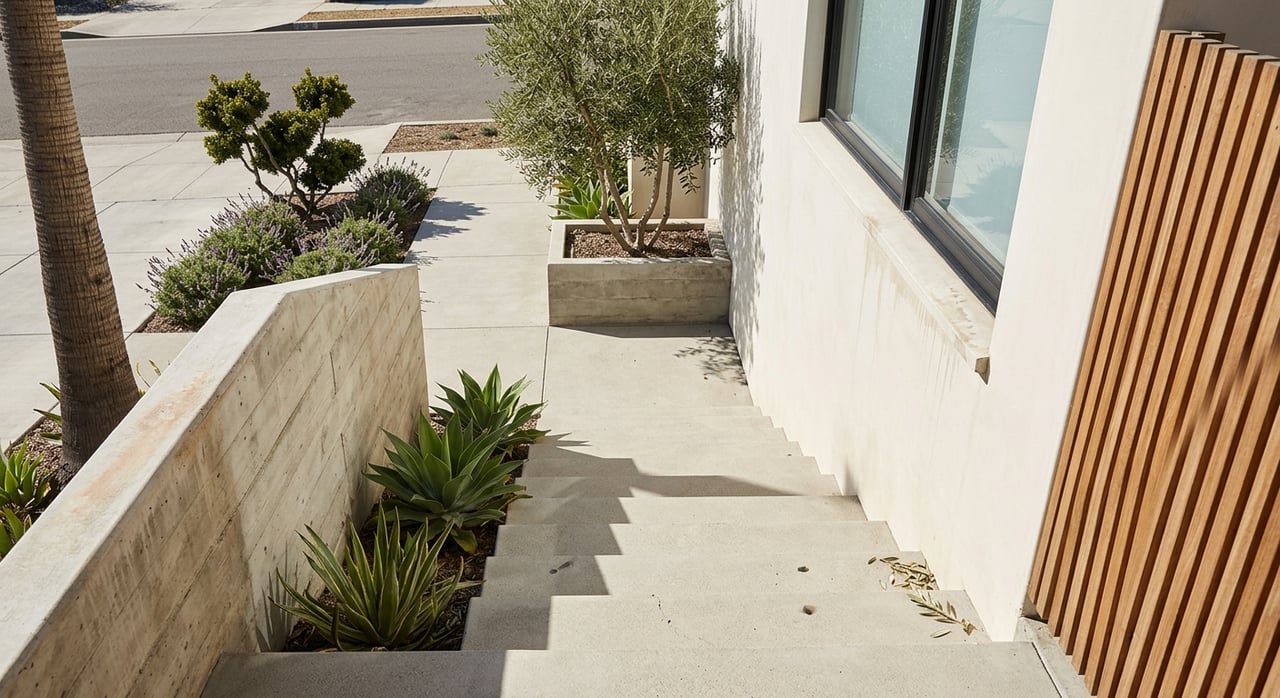
That said, the experience can vary from block to block. A home that looks close on a map may still involve stairs, grade changes, or a longer uphill return trip. In Silver Lake, topography is part of the lifestyle, so convenience often depends on how comfortable you are walking hills or using a bike for shorter trips.
A car-light lifestyle becomes much easier when your regular destinations are nearby. In Silver Lake, the City highlights several everyday anchors that support short trips without driving. These include the Silver Lake Farmers Market, Silver Lake Branch Library, Silver Lake Recreation Center, Silver Lake Dog Park, and neighborhood parks.
These places matter because they create rhythm in your week. Instead of thinking only about restaurants or nightlife, it helps to focus on the errands and routines you repeat most often. If your market stop, outdoor space, and community amenities are close at hand, driving becomes less necessary.
When you are evaluating a home, it helps to ask a simple question: what can you reach easily more than once a week? A short walk to coffee is nice, but a practical car-light routine usually depends on several nearby anchors working together. That might include groceries, transit access, green space, and a few reliable food options.
This is why Silver Lake often appeals to people who enjoy organizing their lives around a few well-connected corridors. It is not a neighborhood where every street functions the same way. The more your home lines up with your actual routine, the better the car-light experience tends to feel.
Silver Lake is hilly, but biking still plays a meaningful role in a car-light routine. LADOT noted that the bike-share station at Sunset and Silver Lake Boulevard sits at a junction already served by bicycle lanes on both streets. Metro Bike Share also recommends electric-assist bikes for the neighborhood’s hills.
That is an important point for anyone imagining daily movement here. Silver Lake is not the kind of place where every street feels easy by bike. Instead, the best biking experience comes from using the corridor network thoughtfully and choosing the right equipment for the terrain.
The City’s community plan identifies Silver Lake Boulevard, Fletcher Drive, Sunset Boulevard, Glendale Boulevard, and the Los Angeles River path as part of the bikeway network. The plan also says the river path is an important connection to Downtown Los Angeles. For local trips and selected commutes, those routes can make biking much more practical.
Metro Bike Share’s ride guide describes the Silver Lake and Los Feliz loop as mostly flat with some short, low-grade hills. That suggests a realistic middle ground. You may not want to bike every errand, but some trips can be quite manageable, especially if you are starting near the flatter corridors.
Silver Lake is not a rail-on-your-block neighborhood, but it is more transit-capable than many parts of Los Angeles. Metro’s fare structure also helps support a car-light budget. The regular fare is $1.75, with free transfers for two hours and fare caps of $5 per day and $18 per week.
Metro also frames bus, rail, bike share, and microtransit as parts of one connected trip network. In practical terms, that means your route may combine a walk, a bus, and rail access rather than relying on a single direct line. For many Silver Lake residents, that layered system is what makes commuting and day-to-day movement possible.
Downtown is one of the more realistic car-light destinations from Silver Lake. Metro’s B Line runs between Union Station and North Hollywood, and Line 2 connects Silver Lake along Sunset Boulevard to Vermont/Sunset, where rail access overlaps with local bus service. Line 92 also runs from Downtown LA to Sylmar Station via Glendale and Glenoaks.
If you live near Sunset Boulevard or with easy access to Vermont/Sunset, the experience usually improves. That is where the strongest transit overlap happens. For a buyer or renter, that kind of location can make a real difference in how often you choose transit over driving.
Line 2 also continues past Hollywood, Beverly Hills, and Westwood. That gives Silver Lake residents a useful east-west connection for work and social plans. Line 92 adds a practical route for Glendale and Burbank, connecting Downtown LA, Echo Park, Silver Lake, Glendale, and Burbank.
This does not mean every trip will be quick or simple. But by Los Angeles standards, Silver Lake offers a meaningful mix of bus, rail access points, and bike connections. For the right household, that can reduce car dependence in a very real way.
Silver Lake is best described as car-light, not car-free. That distinction matters, especially if you are moving from a denser city or expecting every block to feel equally convenient. The neighborhood’s topography, stair streets, and hillside lots create very different daily experiences depending on the exact location.
A home near the main commercial corridors may support walking for many errands. A hillside home may still offer a beautiful setting and strong neighborhood access, but it could rely more on stairs, biking, rideshares, or occasional driving. In other words, lifestyle fit matters just as much as the address itself.
National survey and housing research suggest that walkability matters to many buyers. The National Association of Realtors reported in 2023 that 79% of respondents said walkability was very or somewhat important, and 78% said they would pay more for a home in a walkable community. Separate national research from Mercatus found that homes in walkable neighborhoods can command a premium compared with homes in less walkable areas.
These are national findings, not Silver Lake pricing data. Still, they help explain why the most convenient micro-areas near Sunset Junction, the reservoir edge, and the main commercial corridors may attract strong demand. In a neighborhood with so much variation, convenience often becomes part of the value story.
If living car-light is one of your priorities, it helps to be specific about what that means for you. Some people want to walk to coffee, dinner, and weekend errands. Others need a smoother commute to Downtown, Hollywood, Glendale, or Burbank.
As you evaluate homes, consider these practical questions:
The goal is not to find a perfect no-car scenario. The goal is to find the version of Silver Lake that best matches how you actually live.
For buyers especially, this is where hyperlocal guidance matters. Two homes in Silver Lake can offer very different day-to-day experiences, even when they look close on a map. Understanding those subtle differences can help you choose a home that feels good not just on showing day, but in your real weekly routine.
If you are thinking about buying or selling in Silver Lake, the right strategy starts with the way you want to live in the neighborhood. The Longfellow + Leach Team brings deep local knowledge, design-minded perspective, and thoughtful guidance to help you navigate Silver Lake with clarity.
Stay up to date on the latest real estate trends.
We're here to help you every step of the way. Reach out today with our experienced team for expert guidance and support.